Japanese business etiquette is built on respect, attentiveness and reading the room. The essentials: arrive 5–10 minutes early, greet your counterpart with a slight bow rather than offering a handshake first, exchange business cards (meishi) with two hands and a small bow, dress conservatively in a dark suit, and wait for the most senior person before sitting, drinking, or eating. Small courtesies — saying konnichiwa and arigato, treating a business card respectfully, pouring your colleague's drink before your own — go a remarkably long way.
Traveling to a different country for business affairs can feel like a daunting task. But it doesn't have to be. Becoming knowledgeable about Japanese business etiquette before your big trip can ensure that the time spent there is both respectful and enjoyable. Not only will that knowledge help in adjusting to the new environment, but it will look good as well. Show your business partner that you are serious about your engagement with the following tips.
Japanese Greetings
The first part of meeting fellow businessmen or women is the greeting. Understanding the nuances of this is a necessity upon traveling to the country. Take note of the proper etiquette mentioned below:
Common Japanese Phrases
Learning a few Japanese greetings will show your business partner respect and sincerity. Simple phrases such as “hello” and “goodbye” go a long way. Japanese Kana Pronunciation Meaning こんにちは “Konnichiwa” Hello/Good Afternoon おはようございます “Ohayōgozaimasu” Good morning こんばんは “Konbanwa” Good Evening さようなら “Sayōnara” Goodbye ありがと “Arigatou” thank you; thanks かんぱい “Kanpai” Cheers
Pronunciation is important, so remember to practice the phrases beforehand. Listening to their translation on apps such as Google Translate can help. Don’t worry if this is all you can say. As long as you show you are making a genuine attempt, your Japanese counterparts will generally forgive your faux pas.
Bowing Etiquette
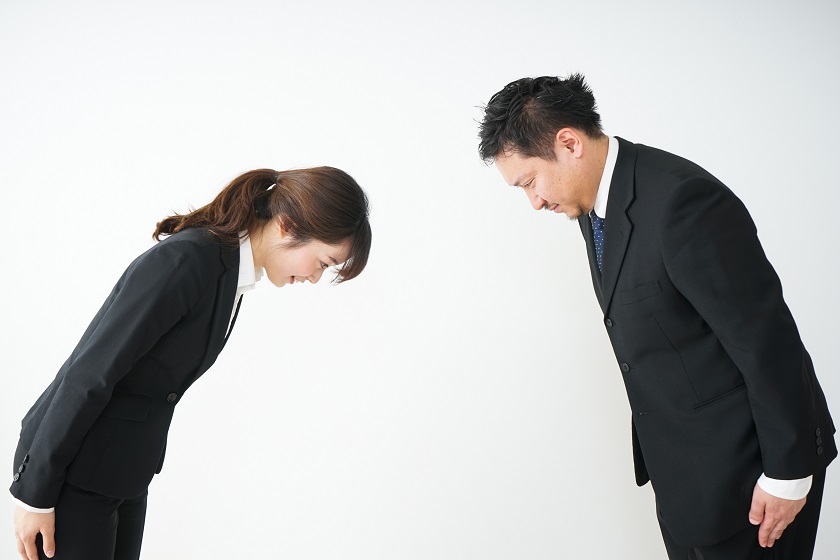
A hallmark of Japanese business etiquette is the bow. Originating from 14th-century samurai, bowing is a distinct and meaningful characteristic of Japanese culture. Traditionally thought of as samurai etiquette, the greeting has grown to find itself performed as a sign of respect in nearly every facet of Japanese business. To learn how to appropriately bow, follow these tips:
Types of Bows – Different bows hold different meanings. Essentially, the longer and deeper the bow, the more respect is being shown. As such the bow can range from a simple nod of the head to an extensive bend at the waist.
Specific Bowing Etiquette – It is important to keep your back straight, keep your hands at your side, and avoid eye contact.
Handshaking – For Westerners traveling to Japan, it is important to remember this etiquette, considering that Japanese do not commonly use handshaking as a greeting. Pay attention to the body language of your business partner. Though they may go in for a handshake, do not expect it and do not initiate it. Simply follow your business partner’s lead.
Business Attire
Dress to impress. Play it safe and wear formal attire when meeting with your business partner. Further business attire tips are included below:
For Men – A blue or black suit is traditional. Though be careful to avoid wearing a black tie, as, when worn with a black suit and white shirt, it can symbolize funeral attire.
For Women – The same formality goes. Though blue or black skirt suits are more common, pants suits are acceptable.
Covering Up – Ensure that your skirt is not too short nor too tight. Japanese are rather conservative, so it is important to cover your skin, especially when traveling with tattoos. Wearing tights or long-sleeved clothing should suffice.
Additional Clothing Items – Avoid open-toed shoes and excessive accessories.
Clean Socks – In some occasions, Western guests will meet with their business partner in places such as a restaurant that do not allow shoes. Clean and well-kept socks are important since they will not necessarily be hidden in your shoes throughout the duration of your business trip.
Easy-to-Remove Shoes – Likewise, a pair of shoes that can be easily removed and put back on bodes well with how frequently you may be removing shoes in Japan.
Removing Your Shoes
Throughout various homes and public settings, removing your shoes is customary. Accordingly, knowing when to do so is important. For business conducted outside of the typical office space, the following tips may help.
Homes – Remove your shoes upon entering a Japanese home. Not doing so is a sign of disrespect in Japanese culture, as well as a sure way to track dirt.
Where To Place Your Shoes – Shoes are commonly removed outside and left on a rack or on the floor. A sign of respect is to place your shoes so they are facing towards the door.
Slippers – On occasion, a pair of slippers may be offered when entering someone’s home. These are allowed around most of the house.
Toilet Slippers – Such “home” slippers are not be worn when eating on tatami mats nor when in the bathroom. A separate pair of “toilet” slippers may be offered.
Public Places – Certain public places, such as restaurants and historic buildings, require that you remove your shoes before entering. The same etiquette for Japanese homes applies here.
Other Public Places – Removing your shoes is not necessary when traveling on public transportation. Rather, the etiquette is mostly reserved for homes, restaurants, and other clean or sacred dwellings.
Business Card Exchange Etiquette
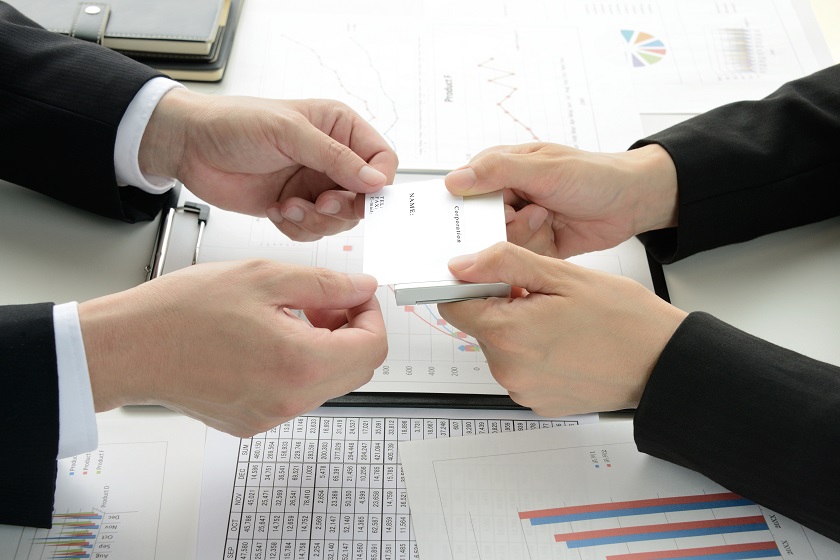
Exchanging business cards is a more formal matter in Japan than it is in many Western countries. Essentially, the business card presents itself as a distinct bearer of identity in a society that prioritizes groups and social status. Therefore, be conscientious of the following protocol when meeting with your business partner:
Business Card Case – To Japanese, the condition of your business card relays how well you conduct yourself. Don’t hand your business partner a frayed card straight out of your wallet. The Japanese commonly keep their business cards within a nice case. It is respectful to do the same.
Use Two Hands – Keep two hands on your business card when offering it to your business partner; likewise, do the same when accepting theirs. Place your hands on the outside of the card so as not to block the name or other important information.
Bow Slightly – Bowing when accepting or delivering a business card is just as respectful as it is when greeting your business partner. However, this bow should only be slight.
Placement of Your Business Card – Place your card below your business partner’s during the exchange.
Say Thank You – Lastly, remember to say thank you upon accepting your business partner’s card.
General Japanese Etiquette
Some additional etiquette may be needed for a successful business endeavour. Such general Japanese etiquette includes:
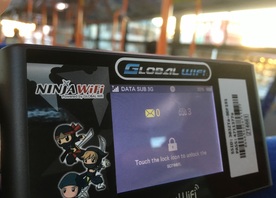
Using Your Phone – The general etiquette is not to cause any disturbances. For that reason, be courteous when using your phone. Many transportation services ask that phones be placed on silent mode. Additionally, you may want secure access to Wi-Fi throughout your trip to Japan. Reliability and punctuality are two Japanese values that should not be discarded. Therefore, you’ll want to be able to inform your business partner if anything happens that may cause you to be late to a meeting.
Taking Your Coat Off – Prior to entering a building, you should take off your coat so as not to cause congestion inside. Carry your coat around your arm before placing it upon a designated coat rack.
Beverages - In a business meeting, it is common to receive a traditional Japanese tea. Don’t begin drinking your tea until your business partner has done the same. It is suggested that you don’t ignore the tea either, as that could come off as a sign of disrespect. Additionally, when eating at a restaurant with your business partner, it is considered rude to pour your own drinks. In Japanese culture, you pour each other’s drinks. Let your business partner pour your drinks, and likewise pour their drinks.
Seating Position – Status is relatively important in Japan. As such, business professionals and guests alike will sit closer to the leader, or the 議長 “gicho,” the higher their ranking appears. For large meetings, it is traditional for people from the same company to sit on the same side of the table. A receptionist may show you or your group to your assigned seating, but if not, it doesn’t hurt to ask.
Carrying an Umbrella - Carrying an umbrella is optimal even if only a slight chance of rain is forecasted. Arriving at a building wet or tracking water once inside is considered rude. Many public places offer umbrella covers. These are more required than they are recommended.
Hou-Ren-Sou: The Communication Framework
One of the most important concepts in Japanese business is hou-ren-sou (報・連・相) — a contraction of three words that together describe how communication should flow within a company:
Hou (報告 — houkoku) — Reporting. Keeping your team informed of progress, results, and outcomes
Ren (連絡 — renraku) — Contact. Sharing relevant information and updates as they happen
Sou (相談 — soudan) — Consultation. Asking for input and seeking advice before making major decisions
For Western businesspeople, hou-ren-sou often feels like over-communication compared to home practice. But in Japanese business culture, proactively keeping people informed is the foundation of trust. A short update email — even if there's not much to report — is genuinely welcomed. So is checking in before making a unilateral decision that affects others.
If you're working with a Japanese team or partner, leaning into this habit will make a real positive impression. Frequent, brief, considered updates work much better than infrequent, long ones.
Business Gift-Giving (Omiyage)
Gift-giving is woven deeply into Japanese business culture. If you're visiting a Japanese company, bringing a thoughtful gift from your home country — known as omiyage (お土産) or in business contexts temiyage (手土産) — is genuinely expected and very much appreciated.
A few guidelines that will serve you well:
Bring something representative of your home country or region — local food specialities (boxed sweets, biscuits, premium tea, or a quality regional product) work beautifully. Anything that tells a small story of where you're from is perfect
Presentation matters as much as content — gifts should be wrapped neatly and ideally come in a department-store gift box. The hotel concierge can often help if you didn't bring something pre-wrapped
Give and receive with two hands — same etiquette as business cards, with a slight bow
Don't expect the gift to be opened in front of you — Japanese custom is often to set the gift aside and open it later, in private. This isn't a snub; it's actually a way of avoiding any awkwardness in reaction
Match the gift's value to the relationship — for a first business meeting, something in the ¥3,000–¥5,000 range is appropriate. For a more important client relationship or a longer trip, ¥5,000–¥10,000 is more typical
Avoid certain numbers — gifts in sets of 4 (the number shi sounds like "death") or 9 (ku sounds like "suffering") are best avoided. Sets of 3, 5 or 7 are ideal
A small gift, thoughtfully presented, sets a beautifully warm tone for the meeting that follows.
Nomikai: After-Work Drinks
A significant portion of Japanese business relationships are built outside the office, often over food and drinks at a nomikai (飲み会) — literally "drinking meeting." If you're invited to one, accept if you can. These gatherings are where the social barriers of formal business meetings often relax, and where genuine working relationships are forged.
A few notes for navigating nomikai well:
Wait for the first toast (kanpai) before drinking, even if your drink has been poured
Pour your colleague's drink before your own — refilling each other's glasses is part of the warmth of these gatherings
You don't have to drink alcohol — soft drinks, oolong tea, or non-alcoholic beer are perfectly acceptable. Just clink the glass with the same enthusiasm at kanpai
It's acceptable to leave at a reasonable time — even if some colleagues continue late into the evening, you're not obligated to stay through to the last train. A polite "I'd better head off — thank you so much, this was wonderful" is fine
A nomikai is one of the most enjoyable parts of doing business in Japan, and very often the place where your Japanese colleagues will get to know you as a person rather than just a business contact.
Frequently Asked Questions
1. Do I have to bow in Japanese business meetings, or is a handshake acceptable?
Bowing is preferred and expected in most business contexts. A keirei (around 30°) is the standard depth for greeting clients and partners. Some Japanese counterparts will offer a handshake — particularly those with international experience — and in that case it's fine to accept. The key is not to initiate a handshake yourself; follow your counterpart's lead.
2. Is it rude not to know any Japanese for a business meeting?
Not at all. Most international Japanese business is conducted in English, and your counterparts will not expect fluency. However, learning a handful of phrases — konnichiwa, arigatō gozaimasu, yoroshiku onegaishimasu — is hugely appreciated and shows respect for the culture. Even imperfect attempts are warmly received.
3. Should I bring a gift to a Japanese business meeting?
Yes, if you can. A thoughtful gift (omiyage) from your home country, neatly wrapped, presented with both hands and a small bow, is a standard part of Japanese business culture. Aim for something in the ¥3,000–¥5,000 range for an initial meeting — regional sweets, premium tea, or another representative speciality from your country work beautifully.
4. How early should I arrive for a business meeting in Japan?
5–10 minutes early is the standard expectation. Arriving exactly on time is considered cutting it close, and arriving late is taken seriously. Build extra time into your transport plans — happily, Japan's rail network is famously punctual, so this is rarely a real challenge once you're in the country.
5. What's the most common mistake foreign visitors make with business cards in Japan?
The most common mistake is treating a received card too casually — tucking it into a wallet or back pocket immediately, writing on it, or stuffing it away without looking at it. Receive it with two hands, take a moment to look at it, and during a seated meeting, place it on the table in front of you for the duration of the conversation. This signals respect for the person, not just the paper.
6. What should I wear to a Japanese business meeting?
For men: a dark blue, grey or black suit with a white or pale blue shirt and a coloured tie (avoid a plain black tie, which carries funeral associations). For women: a conservative blue, grey or black skirt suit or trouser suit, with a modest blouse. Polished, easy-to-slip-off shoes are practical because you may need to remove them at restaurants or traditional venues.
7. Is it OK to decline an invitation to a nomikai?
Yes, occasionally — especially if you have travel constraints or genuine prior commitments. But if you can accept, please do; nomikai are where Japanese working relationships often deepen significantly, and your participation is genuinely valued. You don't have to drink alcohol — soft drinks, tea or non-alcoholic beer are all perfectly fine.
Daniel-San, is a household name at JRPass.com. Daniel-san has shared his rich travel experience for nearly 10 years on the community forum. Ask him for anything related to travel in Japan!


 Deutsch
 Español
 Français
 Italiano
 Nederlands
 Português
 日本語
日本語 한국어
한국어 简体中文
简体中文 繁體中文
繁體中文


.png)