Of all the quirks in Japan's festive season, none generates more outside bewilderment — or more genuine insider affection — than the tradition of eating KFC on Christmas.
Over 3.6 million households order a "party barrel" each year. The tradition began in 1974 when KFC Japan launched a national campaign titled Kurisumasu ni wa Kentakkii — "Kentucky for Christmas." Christmas at the time was festive but undefined in Japan, celebrated widely but without a collective culinary tradition. KFC offered a ready-made solution, packaging fried chicken with sides and cake and selling it as a complete Western-style celebration for families. The Colonel Sanders mascot, dressed as Santa Claus, turned out to be a remarkably persuasive brand ambassador.
The standard party box today, with eight pieces of chicken, a meat gratin and a strawberry vanilla mousse cake, costs around ¥4,990 when booked in advance — and together, KFC's Christmas bookings account for roughly a third of the chain's yearly sales. Orders open from early November. Without a reservation, you'll join queues that stretch around the block on Christmas Day itself.
Many Japanese customers grow up assuming KFC Christmas is an American custom, reinforced by the chain's branding and Western holiday imagery — and are genuinely surprised to learn that KFC holds no such place in the United States. It is, entirely and wonderfully, a Japanese invention.
The Christmas Cake: Lighter Than You'd Expect
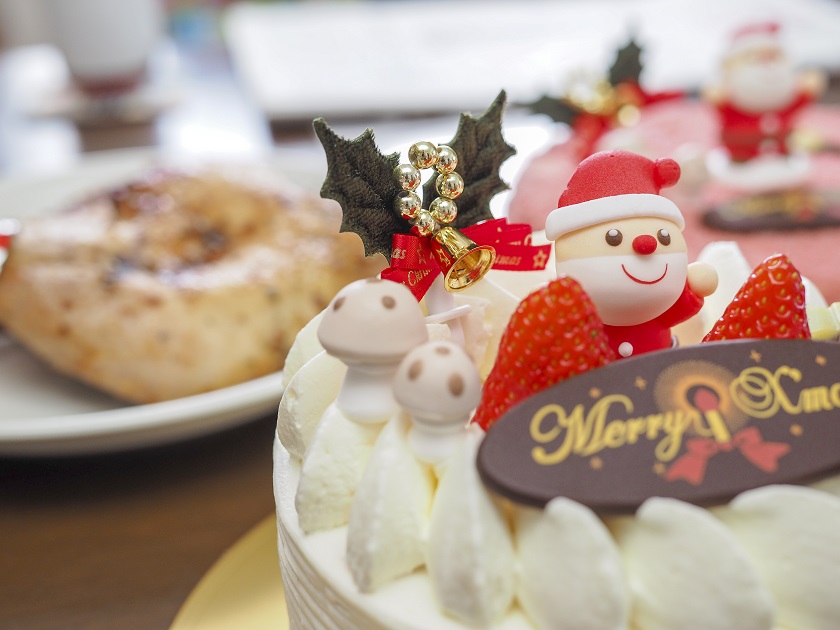
If you're picturing a dense British fruitcake or a German Stollen, Japan's Christmas cake will come as a pleasant surprise. The traditional Japanese Christmas cake is a light sponge covered with whipped cream and fresh strawberries — its red-and-white colours echoing the Japanese flag, introduced by Fujiya, a Yokohama confectionery company, in 1910.
After World War II, when food shortages had made butter, milk and sugar rare luxuries, sweets like cake became symbols of prosperity as the Japanese economy recovered. Anthropologist Hideyo Konagaya has documented how the Christmas cake became embedded in Japanese culture not as a religious symbol but as a marker of middle-class aspiration — something for families who wanted to signal that things were good.
Today, every convenience store, bakery and supermarket stocks Christmas cakes from early December, and they reliably sell out. Ordering in advance from your preferred bakery — and some of the cakes at the high-end department stores are extraordinary — is wise if you want any choice in the matter.
Christmas Eve Is a Time for Romance
Christmas Eve in Japan is less a family gathering and more Japan's unofficial second Valentine's Day. Couples plan the evening for months: a dinner reservation at a special restaurant, a stroll through the illuminations, a gift exchange following traditional Japanese gifting customs.
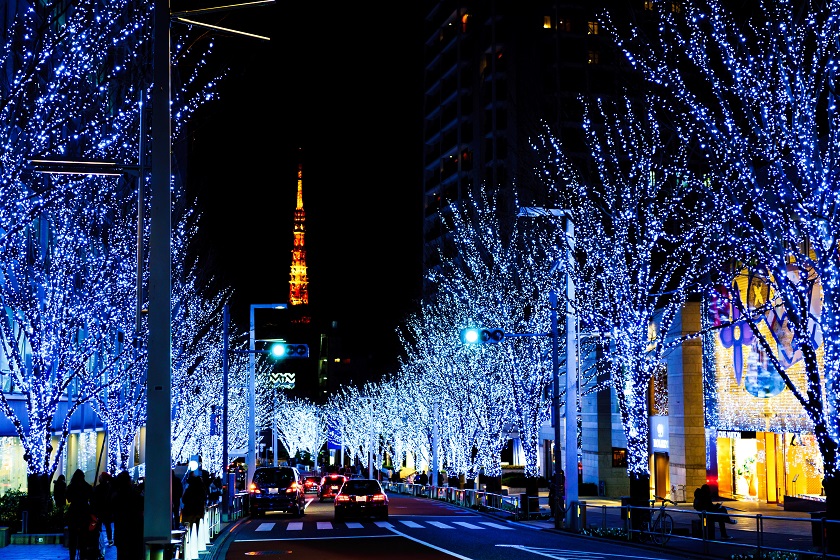
Tokyo's most famous illumination districts — Omotesando's keyaki trees lined with warm lights, Roppongi Hills' elaborate installations, Marunouchi's Nakadori Street stretching in both directions from Tokyo Station — fill with couples on Christmas Eve in a way that feels genuinely different from any other night of the year. It's romantic without being saccharine, and the city's investment in the visual experience of the season is remarkable.
Since Christmas isn't a traditional holiday, families and gift exchanges are more associated with New Year's — a much bigger cultural event in Japan. Christmas Eve is very specifically couple time.
Illuminations: Japan's Greatest December Tradition
Japan's winter illuminations have grown from a simple Christmas decoration tradition into something genuinely spectacular — a national creative competition between cities, parks and commercial districts that runs from October through February and draws millions of visitors.
Illuminations are typically displayed between November and December, but some run longer, starting as early as October and continuing until Valentine's Day or even into spring.
A few highlights worth knowing about:
Kobe Luminarie — One of Japan's oldest and most emotionally resonant illuminations. Designed by Italian artists, it was established as a memorial for victims of the 1995 Great Hanshin earthquake and has drawn millions of visitors each year since. Arches and sculptures covered in thousands of LED lights create a cathedral-like outdoor passage through the city.
Nabana no Sato (Nagoya area) — Consistently ranked among Japan's top illumination events. The flower park at Nagashima is transformed each winter into a landscape of light, including enormous animated light shows and tunnels of LEDs. One of the must-see experiences of the season if you're passing through central Japan.
Ashikaga Flower Park (Tochigi) — Over five million LEDs cover most of the park, best reached by JR from Ueno or Tokyo Station. One of the Kanto region's largest illumination events, running from October into February.
Tokyo Midtown — The "Midtown Christmas" transforms the tower grounds and ice rink into a winter scene, with a paid ice rink and an illuminated "Walkway of Light" that continues until late February.
Marunouchi Nakadori — The street running directly out of Tokyo Station is lined with illuminated trees stretching in both directions, making it easy to visit as part of any evening in central Tokyo.
Yebisu Garden Place — Near Ebisu Station on the Yamanote Line, this former brewery complex hosts a beloved illumination display featuring the world's largest Baccarat crystal chandelier. Running for over 20 years, it's a consistently elegant choice.
Yokohama Red Brick Warehouse — The historic waterfront warehouse transforms each December into a European-flavoured winter market with an approximately 10-metre Christmas tree and an outdoor skating rink alongside the harbour.
The Christmas Markets
Japan's Christmas markets are heavily influenced by the European model — particularly German Christmas markets, with their mulled wine, roasted chestnuts, sausages, wooden crafts and seasonal decorations. Roppongi Hills specialises in German-style items including nutcrackers, traditional decorations and seasonal snacks.
The Tokyo Christmas Market — which has changed location over the years and is typically supported by the German Tourism Association and German Embassy — is worth seeking out for its authentic European food stalls alongside Japanese winter specialities. Check the official website for the current year's venue, as it moves periodically.
The Yokohama Red Brick Warehouse market, inspired by the Nuremberg Christmas Market, is one of the most atmospheric in the Kanto region — the combination of the historic harbour setting, the festive stalls and the illuminations makes it a strong alternative or complement to the Tokyo options.
The Fastest Christmas You'll Ever See
Here's something Japan does that might genuinely catch you off guard: Christmas decorations are taken down no later than the night of December 25th. On December 26th, you won't find Christmas-related decorations anywhere — they are replaced by traditional Japanese New Year's decorations almost immediately.
The speed of the transition is remarkable and reveals something essential about how Japan relates to Christmas. It isn't rooted in religious or cultural obligation that extends beyond the event itself — the season is embraced fully while it lasts, then gives way entirely to oshogatsu (New Year's), which is Japan's truly important year-end occasion.
New Year's in Japan — the stretch from December 31st through January 3rd — is when families gather, when shrine visits (hatsumode) are made, when traditional osechi dishes are shared, and when the country genuinely pauses. If you're planning to visit Japan during the Christmas–New Year transition, it's wise to build in flexibility. Many businesses close for several days around January 1st–3rd, which affects restaurants, shops and attractions in ways that Christmas itself doesn't.
Why December Is a Wonderful Time to Visit Japan
The combination of Japan not treating Christmas as a national holiday and most of its tourism season peaking in spring and autumn means December is one of the more relaxed times to visit — particularly in the first half of the month.
Major temples and heritage sites are significantly quieter than during the cherry blossom or autumn foliage season. Hotel availability is generally good. Train travel is smooth. And what you gain in exchange is the illuminations, which are, genuinely, some of the most spectacular seasonal experiences Japan offers to visitors.
The one significant consideration: the Nozomi Shinkansen runs as fully reserved seating during the peak Christmas and New Year period (late December through early January), meaning you'll need seat reservations rather than being able to hop on freely. Plan seat bookings through a JR ticket office after activating your Japan Rail Pass — and a Pocket WiFi device will keep you connected as you navigate from illumination to illumination after dark.
Frequently Asked Questions (FAQ)
1. Do people celebrate Christmas in Japan?
Yes, but it's celebrated as a secular cultural occasion rather than a religious holiday. Less than 1% of Japan's population is Christian, and December 25th is not a public holiday. Japanese Christmas centres on romantic dates, winter illuminations, Christmas cake and the famous KFC tradition — a distinctly Japanese take on the season that has nothing to do with its Western religious origins.
2. Why do Japanese people eat KFC at Christmas?
KFC launched a national "Kentucky for Christmas" campaign in 1974, positioning its Party Barrel as a complete Western-style celebration at a time when Christmas in Japan was festive but lacked a defined culinary tradition. The campaign was a success, the tradition stuck, and today booking your Christmas KFC months in advance is entirely normal. Roughly a third of KFC Japan's annual revenue comes from the Christmas period.
3. What is Japanese Christmas cake?
The Japanese Christmas cake is a light, fluffy strawberry shortcake topped with whipped cream and fresh strawberries — quite different from the dense fruitcakes common in Western Christmas traditions. The red-and-white colour scheme mirrors the Japanese flag. These cakes sell out quickly and are available at every convenience store, bakery, and department food hall starting in early December.
4. Is Christmas Eve a holiday in Japan?
No, December 24th is not a public holiday. However, it functions as Japan's most romantic evening of the year — equivalent in spirit to Valentine's Day. Couples book restaurants months in advance, cities fill with illuminations designed for strolling, and the atmosphere in places like Omotesando and Roppongi Hills is genuinely magical.
5. When do Christmas decorations come down in Japan?
Very quickly. Christmas decorations in Japan are typically removed no later than the evening of December 25th, immediately replaced by New Year's decorations, as New Year (oshogatsu) is the far more culturally significant holiday. If you visit Japan on December 26th, Christmas will have entirely vanished from the streets.


 Deutsch
 Español
 Français
 Italiano
 Nederlands
 Português
 日本語
日本語 한국어
한국어 简体中文
简体中文 繁體中文
繁體中文