Deutsch
 Español
 Français
 Italiano
 Nederlands
 Português
 日本語
日本語 한국어
한국어 简体中文
简体中文 繁體中文
繁體中文


If you’ve stood on a train platform in Japan, you’ve likely heard a short melody play just before the doors close. These sounds are not random. They are part of a formal system known as "hassha merodii."
These melodies are used across major rail networks, especially on JR East lines in Tokyo, including the Yamanote Line. They are not decorative. They were introduced to improve safety and the passenger experience.
Hassha merodii are typically 5–10 second, station-specific compositions introduced beginning in the late 1980s to signal departure timing in a safer and more intuitive way.
What Is the Music Played at Japanese Train Stations? — Quick Answer
Each station often has its own melody, making them both functional signals and recognizable audio markers across the rail network.
What Is Hassha Merodii?
Hassha merodii (発車メロディ) is the official term for the melodies played at train stations in Japan.
- Meaning: The term translates directly to “departure melody,” and it is sometimes also referred to as hassha sain, meaning “departure signal.”
- Timing: The melody plays approximately 5 to 10 seconds before train doors close and typically ends as the doors begin to shut.
- Purpose: The sound signals that boarding is about to end, replacing older buzzers or alarms.
- Where it is used: The system is most developed on JR East lines in Tokyo, but is also used by Tokyo Metro, Tokyu, Keio, and other major operators.
In smaller stations or rural areas, simpler chimes or buzzers may still be used instead of full melodies.
Why Do Japanese Trains Play Music When They Leave?
- Safety: The melodies help reduce kakekomi josha, which refers to passengers rushing onto trains at the last second, a known cause of injuries on crowded platforms.
- Accessibility: The audio cue supports passengers with visual differences and complements visual signals such as platform displays.
- Passenger experience: Replacing harsh buzzers with music creates a calmer environment, especially in busy stations.
- Operational coordination: Train staff and drivers use the melody as a timing cue for door closure and departure.
These functions explain why the system exists, even if many travelers experience it as a cultural detail rather than an operational one.
Why Does Every Station Have a Different Melody?
- Wayfinding and identity: Different melodies help passengers recognize their station by sound, which can be useful in crowded or visually confusing environments.
- Local references: Many melodies reflect the character or history of the surrounding area.
Two composers are central to this system:
- Hiroaki Ide: His company, Switch, created many early station melodies used across JR East lines.
- Minoru Mukaiya: A musician and former member of Casiopea, he composed many well-known melodies, including those used on the Yamanote Line.
Examples of local references:
- Ebisu Station: This station uses a melody associated with Yebisu Beer, reflecting the area’s history.
- Takadanobaba Station: Here, they use the Astro Boy theme because Tezuka Productions is located nearby.
- Maihama Station: At this station, a Disney-style melody used as it serves Tokyo Disney Resort.
Famous Departure Melodies Worth Knowing
- Ebisu Station (Yamanote Line): This station uses a melody derived from the theme of The Third Man, which was also used in Yebisu Beer advertising.
- Takadanobaba Station (Yamanote Line): This station features the Astro Boy theme, one of the most recognizable melodies in Tokyo.
- Maihama Station (Keiyo Line): This station uses a Disney-style melody to mark its connection to Tokyo Disney Resort.
- Akihabara Station: This station has used anime-inspired melodies on certain platforms, reflecting the district’s identity.
- Yamanote Line standard pieces: Tracks such as “Cielo Estrellado” and “Twilight,” composed by Minoru Mukaiya, appear at multiple stations.
It is important to note that these melodies can change over time. What you hear at a station today may not be permanent.
Departure Melodies on the Shinkansen
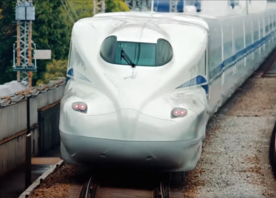
Shinkansen platforms use their own approach to departure sounds.
- Historical example: From 2003 to 2016, the Tokaido Shinkansen used “AMBITIOUS JAPAN!” as its departure melody.
- Current system: Many stations now use shorter instrumental chimes instead of full melodies.
- Regional variation: JR East Shinkansen lines use their own platform melodies, often composed by Minoru Mukaiya.
- On-board sounds: The sounds played inside the train after departure are separate from platform melodies and serve different purposes.
Are Japan Train Station Melodies Being Removed?
- Cost considerations: Maintaining and licensing unique melodies adds operational expense for rail companies.
- Noise concerns: Stations near residential areas sometimes face complaints about frequent audio signals.
- Operational simplification: New systems, including platform screen doors, reduce the need for complex audio cues.
- Accessibility standardization: Some operators prefer universal tones over station-specific melodies.
Despite these trends:
- JR East has retained most of its well-known melodies.
- Fan communities actively document changes and removals.
- Some melodies have been restored after public feedback.
The system is still widely used, but it is evolving.
Why Departure Melodies Matter
These melodies are a small but meaningful part of Japan’s rail system.
- Operational design: The melodies reflect a broader approach to rail operations, where small details are optimized for efficiency and safety.
- Cultural recognition: They have become widely recognized through travel videos, anime, and online communities.
- Passenger awareness: For travelers, they act as both a cue and a subtle way to engage with the environment.
- System identity: They sit alongside other recognizable features such as punctuality and cleanliness, which are often discussed in the broader context of Japanese rail travel.
FAQs
FAQs
Why do Japanese trains play music when they leave?
The melodies, called "hassha merodii," signal that train doors are about to close. They were introduced to reduce rush-related injuries, improve passenger comfort, and provide an accessible audio cue alongside visual signals.
What is the name of the music played at Japanese train stations?
The official term is hassha merodii, which means “departure melody.” Some operators also use the term "hassha sain," meaning “departure signal,” and most melodies are 5–10 seconds long.
Why does every station in Japan have a different melody?
Each melody serves as an audio identifier, helping passengers recognize their station. Many also reflect the surrounding area, such as Ebisu’s connection to Yebisu Beer or Takadanobaba’s use of the Astro Boy theme.
What is hassha merodii?
Hassha merodii is the formal term for the short melodies played before train departures. The system was introduced in the late 1980s, primarily on JR East lines, and is now used across major rail networks.
Are Japan train station melodies being removed?
Some are being replaced due to cost, noise concerns, and operational changes. However, many iconic melodies remain in use, especially on major JR East lines.