Deutsch
 Español
 Français
 Italiano
 Nederlands
 Português
 日本語
日本語 한국어
한국어 简体中文
简体中文 繁體中文
繁體中文


If you're planning to ride the Tokaido Shinkansen between Tokyo, Kyoto and Osaka, you'll quickly notice three names on the departure boards: Nozomi, Hikari and Kodama. They run on the same tracks, use the same trains, and cost the same standard fare — but they stop at a different number of stations, which changes the journey time significantly and, critically, determines whether your Japan Rail Pass is valid.
This guide explains exactly what separates the three services, compares them head to head, and helps you choose the right one for your trip.
Quick Comparison: Hikari, Nozomi and Kodama
Nozomi is the fastest Shinkansen, stopping only at major cities. Hikari is the second-fastest, adding a few extra stops along the Tokaido route. Kodama stops at every station. Nozomi is not covered by the Japan Rail Pass; Hikari and Kodama are. For most JR Pass holders travelling between Tokyo, Kyoto and Osaka, the Hikari is the natural choice — it takes only around 20 minutes longer than the Nozomi and covers the key destinations.
What is the Hikari?
The Hikari (ひかり — meaning "light") is the most important Shinkansen service for Japan Rail Pass holders on the Tokaido and Sanyo lines. It's the fastest option available on your pass between Tokyo and Shin-Osaka, and it stops at Kyoto — making it the key connection for the most popular tourist corridor in Japan.
Hikari is the second fastest option on the route. In addition to the major stations that Nozomi serves, it also stops at selected intermediate stations such as Odawara, Shizuoka or Hamamatsu, depending on the specific service. The journey from Tokyo to Shin-Osaka takes about two hours and 50 minutes — approximately 20 minutes longer than the Nozomi.
The stopping pattern varies between individual Hikari services, so not every Hikari stops at every intermediate station. Some run almost as cleanly as the Nozomi, with just one or two extra stops. Always check the timetable for your specific departure to confirm which stations it serves.
Hikari provides sixteen cars: three Green Cars reserved (first class), eight ordinary reserved, and five unreserved, giving it more unreserved capacity than the Nozomi, which is useful during busy periods.
Seat reservations on the Hikari are free for JR Pass holders and strongly recommended during peak travel seasons, Golden Week, Obon and New Year.
What Is the Nozomi?
The Nozomi is the fastest train service operating on Japan's Tokaido and Sanyo Shinkansen lines. The fastest Nozomi service covers the 515-kilometre journey between Tokyo and Osaka in 2 hours 21 minutes. On the Tokaido section, it stops only at Shinagawa, Shin-Yokohama, Nagoya and Kyoto between Tokyo and Shin-Osaka — six stops in total, skipping every intermediate station.
The Nozomi is the train of choice for business travellers and anyone for whom every minute counts. It runs extremely frequently — with up to 12 trains per hour, Nozomi offers frequent service throughout the day.
As of 2025, Nozomi services are operated primarily by the newest N700S series trainsets. The interiors are comfortable and well-appointed, with power outlets at every seat on the N700S and a dedicated "S Work" car in position 7 designed for business travellers who need to take calls or join video conferences during their journey.
The JR Pass exception: The Nozomi is not covered by the Japan Rail Pass, and there is no workaround or upgrade path. If you board a Nozomi with only a JR Pass, you will be required to pay the full fare for the journey — and in cases of suspected deliberate misuse, that amount can be tripled. The good news is that the Hikari covers essentially the same route at only a modest time premium.
What Is the Kodama?
The Kodama (こだま — meaning "echo") is the local service of the Tokaido Shinkansen, stopping at every station along the route. Between Tokyo and Shin-Osaka, that means 16 stops — including smaller intermediate cities like Odawara, Atami, Mishima, Shizuoka, Kakegawa, Hamamatsu and Toyohashi that neither Nozomi nor most Hikari services call at.
The trip from Tokyo to Shin-Osaka on the Kodama takes about four hours and four minutes — an hour and 30 minutes longer than the Nozomi. Part of the reason for this is that Kodama trains stop at stations for three to six minutes at a time, waiting to be overtaken by faster Nozomi and Hikari services passing through.
The Kodama is fully covered by the Japan Rail Pass. It runs about twice per hour in each direction and notably offers ten unreserved cars — the most of any Tokaido Shinkansen service — making it the easiest to board without a reservation.
Two practical notes: many Kodama services terminate at Nagoya rather than continuing to Shin-Osaka, so always check your specific train's final destination. And if you're heading to a smaller Tokaido city like Shizuoka or Atami, the Kodama may actually be the only direct option — the Hikari only stops at selected intermediate stations.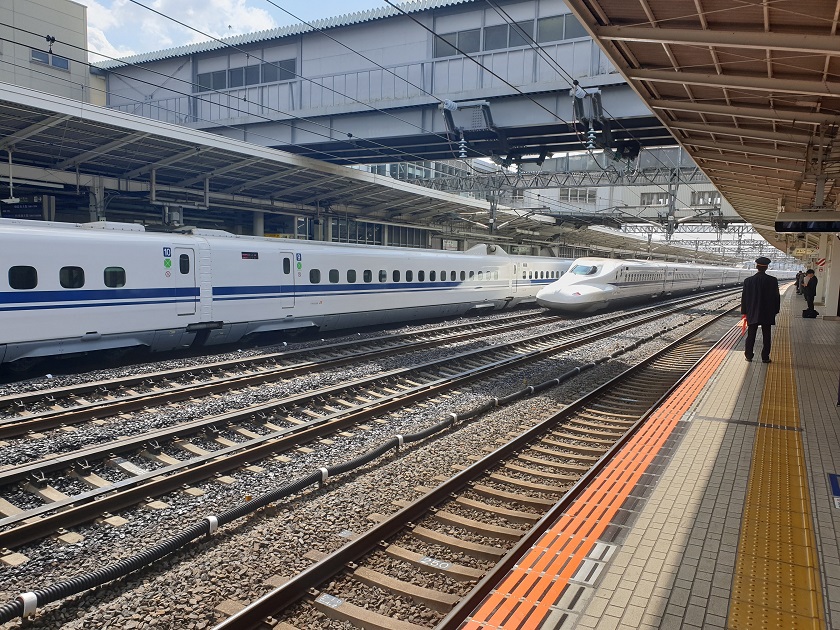
Nozomi vs Hikari: The Key Differences
Nozomi and Hikari use identical trains and cost the same standard fare. The difference is speed (Nozomi is ~20 minutes faster Tokyo–Osaka) and JR Pass eligibility (Nozomi is not covered; Hikari is). For most visitors using a JR Pass, the Hikari is the obvious choice — you lose less than 20 minutes and pay nothing extra.
The comparison most travellers actually need comes down to four points:
Speed: On the Tokyo–Kyoto route, the Hikari takes only 19 minutes longer than the Nozomi due to a couple of extra stops along the way. On a full day of travel, that's a difference that rarely changes what you can do at your destination.
JR Pass: Nozomi is excluded; Hikari is fully covered. For a JR Pass holder, riding the Nozomi means paying the full standard fare on top of your pass — around ¥14,720 for a reserved seat Tokyo to Osaka. That's a meaningful cost with no upside in comfort, since both services use identical trains and seat configurations.
Frequency: Nozomi runs far more often — up to 10 per hour compared to roughly 2 Hikari per hour. In practice, this means you may wait up to 30 minutes for the next Hikari, while a Nozomi is always just minutes away. Planning your departure time in advance eliminates this issue entirely.
Unreserved seats: Hikari has five unreserved cars compared to Nozomi's two (as of March 2025), making it easier to board without a reservation outside peak periods. Still, reserving in advance is always the better approach.
Who should take the Nozomi: Travellers not using the JR Pass, on tight schedules, or travelling to stations the Hikari doesn't serve (though all Hikari stop at Nagoya and Kyoto).
Who should take the Hikari: Almost every JR Pass holder travelling the Tokaido route.
Hikari vs Kodama: The Key Differences
Choosing between Hikari and Kodama is simpler once you know what each is for. Both are fully covered by the JR Pass. The choice is about speed versus access.
If you're going to Tokyo, Nagoya, Kyoto or Shin-Osaka: Take the Hikari every time. It's faster, runs the full route, and the time saving over the Kodama is substantial — around 70 minutes on the full Tokyo–Osaka run.
If you're heading to a smaller intermediate city: The Kodama is often your only direct option. Shizuoka, Kakegawa, Hamamatsu, Mishima, Atami — these stations are served by every Kodama but only selected Hikari. Check the timetable for your specific destination before assuming the Hikari will stop there.
If you want the most flexibility boarding without a reservation: The Kodama's ten unreserved cars make it the easiest Shinkansen to jump on during busy periods.
One thing to watch with the Kodama: at intermediate stations, it may sit on the platform for several minutes waiting for faster services to pass. This is normal and not a cause for concern — but it does add to the overall journey time in a way that goes beyond just the number of stops.
How to Ride the Hikari with a JR Pass
Using the Japan Rail Pass on the Hikari is straightforward. You have two options:
Non-reserved seat: Simply show your activated JR Pass at the ticket gate and board any Hikari carriage marked as non-reserved (unreserved). Hikari trains have five non-reserved cars, so outside peak seasons there's usually space — but this is less reliable during Golden Week, Obon and New Year.
Reserved seat (recommended): Head to any JR ticket office (Midori-no-Madoguchi) with your pass and request a seat reservation for your chosen Hikari service. This is completely free for JR Pass holders, takes a few minutes, and guarantees your seat. Reservations open one month in advance. For busy travel periods, booking as soon as possible is sensible.
For a smooth start to your trip, the Meet & Greet service handles JR Pass activation and first reservations at the airport — ideal if you want to arrive in Japan ready to board without queueing at a station office.
Timetable: The official JR Central timetable tool at global.jr-central.co.jp is the most reliable source for up-to-date Hikari schedules. On average, a Hikari departs at least every 30 minutes during the day in both directions.
Frequently Asked Questions
1. What is the difference between the Nozomi and the Hikari?
The Nozomi and Hikari run on the same tracks using identical trains at the same standard fare. The Nozomi stops at fewer stations and is approximately 20 minutes faster on the Tokyo–Osaka route. The critical difference for most visitors is that the Nozomi is not covered by the Japan Rail Pass, while the Hikari is. For JR Pass holders, the Hikari is the recommended choice: minimal time penalty, and no extra cost.
2. Is the Nozomi faster than the Hikari?
Yes. The fastest Nozomi covers Tokyo to Shin-Osaka in around 2 hours 21 minutes. The Hikari takes approximately 2 hours 50 minutes on the same route — about 20 minutes longer. On the Tokyo–Kyoto leg specifically, the difference is closer to 19 minutes.
3. Do Nozomi and Hikari cost the same?
Yes — the standard fare for a Nozomi and a Hikari between the same two stations is identical. What changes is JR Pass eligibility: Hikari is covered; Nozomi is not. JR Pass holders who board a Nozomi are required to pay the full standard fare for that journey.
4. What is the difference between the Hikari and the Kodama?
Both are JR Pass eligible. The Hikari stops at major stations plus selected intermediate stops, reaching Shin-Osaka from Tokyo in around 2 hours 50 minutes. The Kodama stops at all 16 Tokaido stations and takes approximately 4 hours. Choose Hikari for speed on the main corridor; choose Kodama if you need to reach a smaller intermediate city like Shizuoka or Atami.
5. Which Shinkansen is best for JR Pass holders?
The Hikari is the best option for most JR Pass holders travelling the Tokaido Shinkansen between Tokyo, Nagoya, Kyoto and Shin-Osaka. It's covered by the pass, stops at all the key tourist destinations, and runs frequently enough that waits are manageable. The Kodama is the right choice when you need to stop at smaller intermediate stations.
6. Can I use the JR Pass on the Nozomi?
No. The Nozomi (and the Mizuho on the Sanyo/Kyushu Shinkansen) are the only Shinkansen services not covered by the standard Japan Rail Pass. There is no upgrade path or surcharge option — if you travel on the Nozomi, you pay the full fare regardless of your pass. All other Shinkansen services, including the Hikari, Kodama, Hayabusa, Sakura and others, are fully covered.
.png)