English
 Deutsch
 Español
 Français
 Italiano
 Nederlands
 日本語
日本語 한국어
한국어 简体中文
简体中文 繁體中文
繁體中文


Table of contents:
10 Tips for Navigating the Tokyo Metro
10 Tips for Navigating the Osaka Metro
10 Tips for Navigating the Kyoto Metro
Japan's metro systems look intimidating at first, but they're some of the easiest, cleanest and most reliable in the world once you know a few basics. For places like Tokyo, Kyoto and Osaka, you'll want to use the metro networks to get around each city on arrival and when sightseeing.
While Japan Rail trains help visitors travel around Japan, their use is much more limited once you get into the big cities. These subway systems make it really easy to get around these sprawling cities, no matter if you're sightseeing or just trying to get to your hotel from the main train station.
So you can ride with confidence from day one, here are thirty tips for using the metro in Tokyo, Osaka and Kyoto, plus a quick checklist at the end.
10 Tips for Navigating the Tokyo Metro
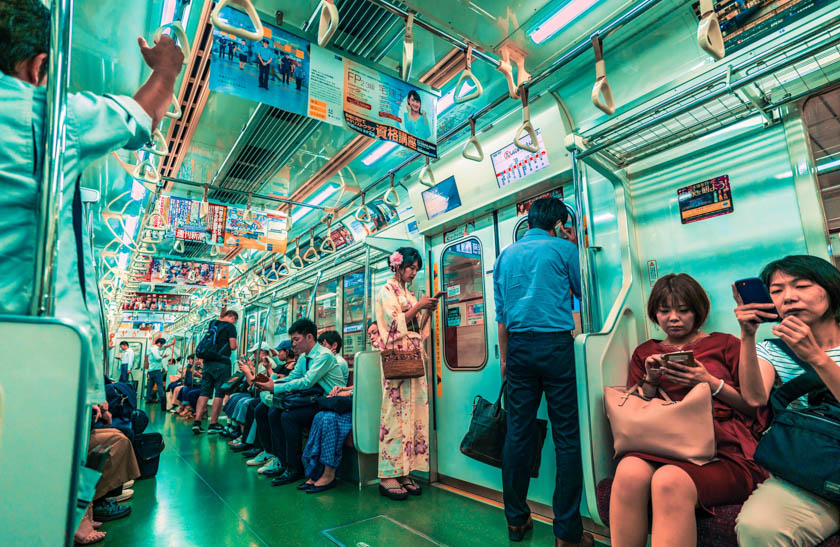
With a city as large as Tokyo, you’re going to want as much help as possible to get around. The easiest and most reliable option for that is to use the Tokyo Metro that helps connect the city.
1. Know the Different Companies
Across Tokyo there are actually two different companies running metro lines, Tokyo Metro and the Toei Subway. There are thirteen metro lines in Tokyo, with nine Tokyo Metro lines and four Toei Subway ones. Alongside these metro lines are urban JR lines, like the JR Yamanote Line that are very useful for getting around Tokyo. Do note that you can only use your Japan Rail Pass on JR Lines like the Yamanote Line.
2. Learning the Tokyo Lines
With so many different Tokyo lines to keep track of, it’s important you learn how to tell them all apart. Luckily, the metros use a simple system for identifying lines and stations. Each line is represented by a colour and letter, with each station numbered. That way you don’t need to know the purple line is the Hanzomon line or that stops N1 and N2 are on the Namboku line.
The Tokyo Metro Lines are:
- Ginza Line – (G) and Orange
- Marunouchi Line – (M) and Red
- Hibiya Line – (H) and Silver
- Tozai Line – (T) and Sky Blue
- Chiyoda Line – (C) and Green
- Yurakucho Line – (Y) and Gold
- Hanzomon Line – (Z) and Purple
- Nanboku Line – (N) and Emerald
- Fukutoshin Line – (F) and Brown
The Toei Subway Lines are:
- Asakusa Line – (A) and Rose
- Mita Line – (I) and Blue
- Shinjuku Line – (S) and Leaf Green
- Oedo Line – (E) and Ruby
3. Read the Metro Station Signs
Sometimes navigating the metro stations can be as big a challenge as navigating the metro network. To find your way, make use of the many signs that will help you get about. At street level metro stations are clearly marked, showing the station number and what metro lines pass through there. Down in the station, overhead signs in Japanese and English that are blue will direct you to train lines and ones in yellow will take you to the different exits.
4. Understand the Ticket Types
When it comes to paying for your metro ride, there are several options available. The simplest approach is a single trip ticket, but it isn’t the most convenient way to get about. Other options include the Tokyo Subway Ticket, which gives unlimited travel on Tokyo Metro and Toei lines for 24, 48 or 72 hours and, since March 2026, is sold as a QR code ticket bought in advance online, and prepaid IC cards such as PASMO and Suica.
With this kind of Japan metro card you add cash to the card and then simply tap it at the fare gate to be let through. Fares are automatically deducted from the card and can be topped up at ticket vending machines. Regular cards carry a deposit you can get back when you return them, while tourist versions like the Welcome Suica work differently, so check the terms when you buy. Physical cards were in short supply for a while, but they returned to sale in 2025.
You can also tap a contactless credit card (or a phone with Apple Pay or Google Pay) straight on the Tokyo Metro and Toei gates, with no ticket needed. Just use the same card for the whole journey, as it can't be mixed with an IC card or paper ticket.
5. Working out the Fare
When travelling with a single ticket, the cost of the fare will depend on the distance to your destination. To work out your fare there’s no need for a special metro calculator, you can either look at an English fare chart in the station, check the metro app or let the ticket machine work the fare out for you by entering your destination. Fares for the Tokyo Metro range from 170 to 320 yen.
If you end up travelling further than your original fare, it’s possible to adjust you ticket at your destination.
6. Using Ticket Machines
If you plan to purchase a ticket from one of the station ticket machines, there’s two important things to make things simpler. One is that you can change the language to English with the button in the top right corner if your Japanese isn’t great. Secondly, machines mostly take cash for single tickets, so keep some coins and 1,000-yen notes handy, or skip the machine altogether and tap a contactless card at the gate.
7. Boarding the Subway
Like many aspects of Japanese society, there’s a proper etiquette to waiting and boarding a metro train. Use the guides and lines on the platform to line up off to the side of the doors. Once the train arrives, patiently wait for passengers to get off before getting on.
8. Transfer Between Lines
To get around the city you may need to transfer from one subway line to another. In some stations you will need to pass through special orange transfer gates in order to get between platforms, so don’t be alarmed if that happens. Do know though that transfers must be less than 30 minutes, or you’ll need a new ticket.
9. Get the Tokyo Metro App
There are a number of apps that can help you plan your travels around the city via metro. However, there’s actually an official Tokyo Metro app that will help you determine things like what route to take, how long the journey will be and what it will cost. Otherwise you can download a map of the Tokyo Metro here.
10. Finding Information and Help
Aside from the smartphone apps, there are other ways to get information and assistance. One useful resource is the Tokyo Metro Guide handed out at the airport and in metro stations, which have a Tokyo Metro Map, information on using the metro and how to get various sightseeing spots. Metro stations also have a Tokyo Metro Tourist Information desk where you can ask for assistance.
10 Tips for Navigating the Osaka Metro
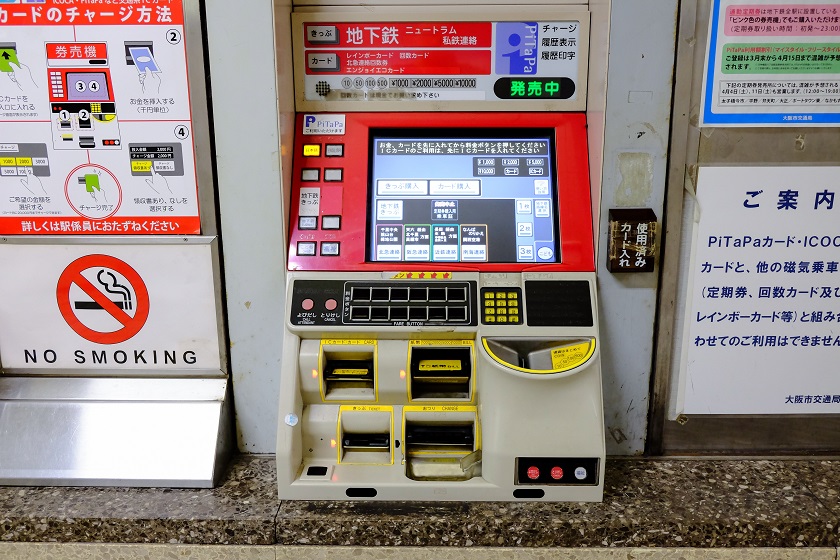
Osaka is another of major Japanese cities that tourists love to visit, with attractions spread right across its urban sprawl. That’s why it’s so useful that you have the Osaka Metro to help you get around.
11. The Different Osaka Lines
Travelling around on the metro in Osaka is quite straightforward, as all nine metro lines belong to the one metro company. Each metro line is identified by a special colour and letter symbol, so you don’t necessarily need to know the line names to get about. So rather than worrying about which line is the Yotsubashi line, you just need to remember the letter Y and the colour blue.
The Osaka Metro Lines are:
- Midosuji Line – (M) and Red
- Tanimachi Line – (T) and Purple
- Yotsubashi Line – (Y) and Blue
- Chuo Line – (C) and Green
- Sennichimae Line – (S) and Pink
- Sakaisuji Line – (K) and Brown
- Nagahori Tsurumi-ryokuchiLine – (N) and Yellow
- ImazatosujiLine – (I) and Orange
- New Tram – (P) and Sky Blue
12. Main Tourist Lines
Even though Osaka has nine different subway lines, many tourists find they only ever need two while sightseeing. The Midosuji Line and Chuo Line form a cross over the city that connects at Honmachi Station, allowing you to travel right across Osaka. Using them you can easily get from the major train station of Shin-Osaka into the city centre, while also reaching places like Tennoji Zoo and Osaka Castle.
13. Osaka JR Urban Trains
On top of the city’s metro lines, there are also the Osaka JR urban lines to help you get about. Two that stick just to Osaka are the Osaka Loop Line and the JR Sakurajima Line, nicknamed the Yumesaki Line. The Osaka Loop Line is the more useful for sightseeing, but both are covered under your JR Pass.
14. Avoid Rush Hour
Much like in any big city, it’s wise to avoid using the metro during Osaka’s rush hour if you’re in a hurry or want a comfortable ride. As such, try to not use the metro between 7.30-9.30am and 5-8pm.
15. Choosing Between Tickets, Cards or a Pass
Travelling on the Osaka Subway you have three options for paying for your journey. The simplest is to purchase a single trip ticket from a machine, useful if you only need the one trip. Then there are prepaid cards which you put money on in advance and simply swipe each time you enter and leave the system. Some cards, like the Icoca, Suica or Pasmo cards, are the same as ones used in Tokyo.
Then there are one-day passes like the Amazing Osaka Pass, which provides unlimited travel and also includes entry to certain Osaka attractions, which can be useful for those planning a lot of sightseeing. Other Osaka day passes, such as the Osaka Enjoy Card and Osaka Kaiyu Ticket, have been offered over the years, so check which ones are currently on sale before you go. Osaka Metro also accepts contactless credit card taps at the gates, so you may not need a pass or IC card at all.
16. Figuring Out the Right Fare
A nice benefit of having a prepaid card or pass is that you don’t need to work out how much each trip costs. Travelling with a single ticket though, you’ll need to work out how much your journey is. Metro fares start at around 180 yen and rise with distance (check the current fare chart, as prices have been updated in recent years), and you can use a metro fare finder board to figure out your fare. But don’t worry if you get it wrong, as there are fare adjustment machines in stations that allow you to pay the extra before leaving your destination.
17. Paying for Your Ticket
It’s important to remember that in many ways Japan is still a cash society. At ticket machines you’ll find that you’ll need cash if you’re buying a single trip ticket or topping up your prepaid card. What’s more, certain machines won’t accept larger notes like the 5,000 and 10,000 yen notes. Check the sign at the top of the machine to see what money it accepts.
18. Getting By on English
Being a popular destination with tourists, you should be able to navigate the metro system using just English. Signs throughout the metro are all translated into English, staff often speak it at least a little and ticket machines all have an English guidance button in the top left corner.
19. Apps For Working Out Your Route
There are travel apps for all aspects of visiting Japan, including apps that will help you use the different Japan metro networks. Two to try are Jorudan and NAVITIME’s Japan Travel app, both of which will help you work out how to get to your destination using the Osaka Subway. Google Maps also works very well for Japanese public transport.
20. Download a Map to Your Phone
If you’re at all worried about internet access or using data, then consider just downloading this Osaka metro pdf that has a map of all the stations. Save it to your phone and you can check it whenever you need to.
10 Tips for Navigating the Kyoto Metro
Kyoto is one of Japan’s most interesting destinations to visit and you’ll likely spend a lot of time there sightseeing. To do that you’ll want to make the most of the Kyoto Metro, which means knowing how to use it.
21. A Small, But Useful Subway System
Unlike the other big cities mentioned here, Kyoto has a relatively small subway system. The network has two subway lines: the Karasuma Line that runs north-south and the Tozai Line that goes east-west. Stations on the Karasuma Line are marked by the colour green and the letter “K”, while ones on the Tozai Line are orange and have the letter “T”.
22. Switching Metro Lines
With only two metro lines covering the city, the most important station to know is the one where they connect. Karasuma Oike is where the Karasuma Line and Tozai Line meet, so look for the K08 or T13 station when you want to transfer between the two.
23. Arriving in Kyoto
Whether you’re coming to Kyoto by plane or bullet train, your entry point into the city is likely the impressive Kyoto Station. What’s useful is that Kyoto Station is on the Karasuma Line so you can immediately head down to the metro station and use it to reach your accommodation.
24. Other Kyoto Urban Trains
Besides the metro, there are also various trains that travel through Kyoto’s urban area. Many travel off to other cities like Osaka and Nara such as the Keihan Main Line, but there is the JR Sagano Line which you can use to reach Saga-Arashiyama Station, the nearest stop to the incredible Arashiyama Bamboo Forest. Best of all, you can use your Japan Rail Pass for this train.
25. Combining the Metro with City Buses
Many tourists rely on city buses to visit major tourist attractions like the Kinkakuji Golden Pavilion as there are no metro stations right by it. However, buses often can get stuck in traffic, so it’s best to limit your time in them. If possible, take the metro to the nearest station to your attraction and then take the bus, cutting down your travel time. Or just walk if it’s not far.
26. Get an Offline Metro Map
Even with just two lines to keep track of, it helps to have a metro map you can easily check. Carrying around a physical map can be a bit of a hassle, which is why you should download a Kyoto metro map from here where you can also get a Japan Rail map.
27. Searching Routes and Travel Times
While there are always apps like Jorudan and NAVITIME that help you get about, there’s also the Arukumachi KYOTO Route Planner dedicated to travel around Kyoto. On it, you’ll be able to search public transport routes, but also look at station maps to see their layout.
28. Finding the Right Ticket Type
There are different types of tickets you can get for travelling on the Kyoto subway, with the most basic option a single fare ticket for just the one trip. Next are the Kyoto passes, such as the Subway & Bus One-Day Pass, which combines unlimited travel on the subway and city buses, and the cheaper Subway-only One-Day Pass. Pass names and prices change from time to time, so confirm what’s currently offered at the Kyoto City Transportation Bureau before you buy.
Your other option is the IC prepaid cards that allow you to put money on a card and simply swipe in and out at the station. Unlike Tokyo and Osaka, Kyoto’s subway and city buses don’t yet accept contactless credit card taps, so an IC card or pass is the easiest way to pay. Icoca cards are the main card type in Kyoto but you can also use Suica Cards and PiTaPa Cards.
29. Kyoto Subway Ticket Machines
Walking up to a subway ticket machine can be quite intimidating but they’re not as tricky as you might think. Above the machines will be a fare chart, showing how much it costs to reach each station. Fares in Kyoto start at around 210 yen and rise with distance. Then there’s the big “English Guidance” button you can press. Do note that machines only take certain bill denominations and you’ll need to pay with cash.
30. Check out Kyoto Station
It’s not often that a train or metro station is an attraction itself, but wait until you see Kyoto Station. This cavernous and modern building is definitely worth exploring before or after you take the metro, with shops and restaurants right through it.
FAQ
1. Can I use my JR Pass on the Tokyo Metro?
No. The Japan Rail Pass only covers JR lines, such as the Yamanote Line in Tokyo, the Osaka Loop Line and the JR Sagano Line in Kyoto. The Tokyo Metro, Toei Subway, Osaka Metro and Kyoto subway are run by separate companies, so you’ll need an IC card, a ticket or a subway pass for those.
2. Can I tap a credit card to ride the subway in Japan?
In Tokyo and Osaka, yes. Contactless credit and debit cards (and phones with Apple Pay or Google Pay) are accepted at Tokyo Metro, Toei and Osaka Metro gates. Kyoto’s subway and city buses don’t accept them yet. Use the same card for the whole trip and check that it works at both your start and end stations.
3. Is a Suica or PASMO card better than a subway pass?
For most visitors, an IC card is the most flexible option, because it works on the metro, JR city trains, buses and in many shops. A Tokyo Subway Ticket (24, 48 or 72 hours, now sold as a QR ticket) can be better value if you plan to take the Tokyo Metro or Toei many times in a short period, so add up your planned rides before you decide.
4. How many metro lines are there in Tokyo?
There are thirteen subway lines in Tokyo: nine run by Tokyo Metro and four by the Toei Subway. Each line has its own colour and letter, and every station is numbered, so you can navigate without reading Japanese.
5. Do I need to speak Japanese to use the metro?
No. Signs in Tokyo, Osaka and Kyoto are in English, most ticket machines have an English button, and station staff will usually help with basic questions.
.png)